Prosthetic limbs
EchelonVAC Below-Knee Prosthesis: Hydraulic Ankle with Integrated Vacuum Suspension
The EchelonVAC below-knee prosthesis combines a hydraulic ankle joint with an integrated vacuum-assisted socket pump, backed by research on vacuum suspension and Lê Hoàn Prosthetics' own published study on running prostheses.

EchelonVAC is a hydraulic ankle-foot from Blatchford (UK) with a vacuum pump built into the ankle that creates suction for the prosthetic socket. A single component does three jobs at once: it flexes like a carbon foot, damps like an ankle and holds the residual limb firmly in the socket with negative pressure — with no battery or external power.
This page explains in plain language how it works, what the research shows, the technical specifications, who it suits and how we fit it at Lê Hoàn Prosthetics & Orthotics.
What is EchelonVAC?
Blatchford's Echelon range combines a dual carbon foot spring (E-Carbon) that stores and returns energy with every step and a hydraulic ankle that lets the foot move smoothly and adapt to terrain. The VAC (vacuum) version adds a vacuum pump housed inside the ankle.
EchelonVAC is designed for people with a transtibial (below-knee) amputation at activity level 3 — walking outdoors, on variable terrain and active through the day.

How it works: every step is a pump stroke
The pump sits inside the ankle and runs purely on gait motion. Each step has three stages:
- Loading: at heel strike the wearer presses weight into the prosthesis and air left in the socket is pushed out through a one-way valve.
- Plantarflexion: as the foot lowers to the floor, the hydraulic ankle moves and draws air out of the socket into the vacuum chamber, creating negative pressure.
- Dorsiflexion: as the shin moves forward, the air in the pump chamber is released through a second one-way valve while the vacuum in the socket is kept.

What does a hydraulic ankle add?
Unlike a rigid foot, a hydraulic ankle uses fluid damping to control how fast the foot lowers to the ground and lets the ankle adjust its angle to the surface.
- A softer foot-down, reducing the “slap” through the limb and socket.
- Better adaptation on slopes, steps and uneven ground.
- The ankle adjusts its angle between sitting, standing and walking, keeping the foot flat on the floor even on slopes, for a more natural and stable gait.
- Higher toe clearance during swing, which lowers tripping risk (measured in studies by Johnson 2014 and Riveras 2020).
- Studies have also compared walking energy cost between hydraulic and rigid ankles (Askew 2019) — see the references.
What does vacuum do for the residual limb?
Residual-limb volume changes through the day (morning vs. afternoon, after activity vs. rest), so a socket can feel tight or loose. Negative pressure draws the tissue against the socket wall, which:
- Keeps the socket fit steadier throughout the day and limits volume fluctuation.
- Reduces up-and-down movement between limb and socket (pistoning) compared with passive suction or pin-lock suspension (Board, Beil, Klute — see references).
- Makes the limb feel more firmly “attached”, improving sensation and control of the prosthesis, comfort and safety.
- A community-based follow-up study (Rosenblatt 2017) linked vacuum-assisted suspension to fewer falls.
- Vacuum-assisted suspension (VASS) is already widely used in the UK, the US and Europe.
A note on the strength of the evidence
Most studies of vacuum suspension and hydraulic ankles are small, and some involve manufacturer support. Real-world results vary with limb shape, activity level and socket quality. That is why we assess and trial each case individually rather than promising the same result to everyone.
Who is it for?
EchelonVAC is usually a good match when:
- You have a below-knee amputation, activity level 3 and walk a lot outdoors.
- Your weight is up to 125 kg and your foot size is 22–30 cm.
- Your limb volume changes during the day, or your socket tends to loosen or slip.
Points to consider before choosing
- It needs build height: 121–131 mm, so a very long residual limb must be assessed carefully.
- The socket must be airtight, with a suitable liner and sleeve — socket quality decides how well vacuum works.
- People with lower activity may be better served by a simpler, lighter, lower-cost foot.
- It costs more than a conventional foot; we will help you balance needs and budget.
How we fit EchelonVAC at Lê Hoàn
- Assessment of the residual limb, activity level and daily needs.
- Fabrication of an airtight socket and choice of liner and sleeve.
- Assembly, static and dynamic alignment, and adjusting ankle resistance to your gait.
- Gait training and instructions for use and cleaning of the socket and liner.
- Follow-up visits and fine-tuning as the residual limb changes over time.
Lê Hoàn's experience and research
Notably, Lê Ngọc Hoàn (doctoral candidate, Master's, engineer in prosthetics & orthotics; CPO – ISPO Category I) — founder of Lê Hoàn Prosthetics & Orthotics — published research on a running prosthesis using a vacuum-assisted socket system in the international journal JPO: Journal of Prosthetics and Orthotics (2021). The study, involving an amputee runner, found no significant difference in running speed between the VASS and non-VASS prosthesis, but the VASS system provided clear benefits in comfort, proprioception and residual-limb volume stability during high-intensity activity.
Alongside EchelonVAC, Lê Hoàn also offers running prostheses for users who want to run or play sports at a competitive or recreational level, tested and fine-tuned using real-world speed and energy-expenditure measurements.
Technical specifications (per manufacturer Blatchford)
- Activity level
- 3 (outdoor walking, variable terrain)
- Maximum user weight
- 125 kg
- Foot size
- 22 – 30 cm
- Component weight
- about 700 g
- Build height
- 121 – 131 mm
- Maximum vacuum
- 17 inHg
- Power
- No battery or external power; driven by gait motion
- Ankle
- Passive hydraulic, plantarflexion resistance adjustable
Videos from the Lê Hoàn YouTube channel

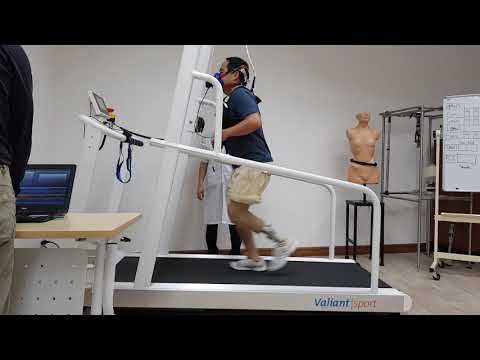
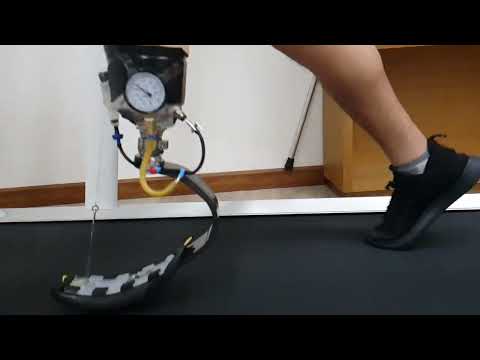
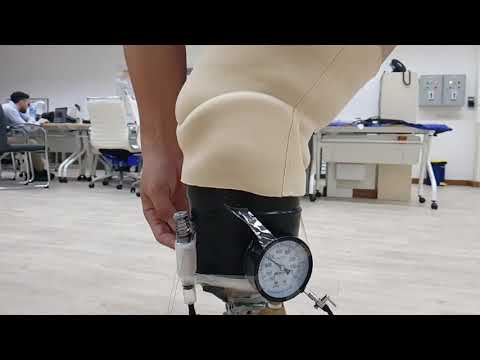
For advice on the below-knee prosthesis best suited to your activity level, contact Lê Hoàn Prosthetics & Orthotics at hotline 0985211888.
References
- Blatchford Mobility — EchelonVAC (thông số kỹ thuật & cơ chế / specifications & mechanism)
- Klute GK, et al. Vacuum-assisted socket suspension compared with pin suspension for lower extremity amputees: effect on fit, activity, and limb volume. Arch Phys Med Rehabil. 2011
- Beil TL, et al. Interface pressures during ambulation using suction and vacuum-assisted prosthetic sockets. J Rehabil Res Dev. 2002
- Rosenblatt NJ, Ehrhardt T. The effect of vacuum assisted socket suspension on prospective, community-based falls by users of lower limb prostheses. Gait Posture. 2017
- De Asha AR, et al. Impact on the biomechanics of overground gait of using an 'Echelon' hydraulic ankle-foot device in unilateral trans-tibial amputees. Clin Biomech. 2014
- Askew GN, et al. Energy cost of ambulation in trans-tibial amputees using a dynamic-response foot with hydraulic versus rigid 'ankle'. J Neuroeng Rehabil. 2019
- Bai X, et al. A biomechanical assessment of hydraulic ankle-foot devices with and without micro-processor control during slope ambulation in trans-femoral amputees. PLoS One. 2018
- Johnson L, De Asha AR, et al. Toe clearance when walking in people with unilateral transtibial amputation: effects of passive hydraulic ankle. J Rehabil Res Dev. 2014
- Riveras M, et al. Minimum toe clearance and tripping probability in people with unilateral transtibial amputation walking on ramps with different prosthetic designs. Gait Posture. 2020
Related solutions

Hip Disarticulation Prosthesis
A hip disarticulation prosthesis restores mobility for people who have lost their entire lower limb from the hip joint, using modern socket design to rebuild standing and walking ability.
Hip Disarticulation Prosthesis
Fitting an Ankle Disarticulation Prosthesis
An ankle disarticulation prosthesis serves the lowest amputation level of the leg, preserving maximum natural weight-bearing function. Learn the fitting process and who needs this type of prosthesis.
Fitting an Ankle Disarticulation Prosthesis
A Trusted, Quality Address for Premium Prosthetic Legs
What a premium prosthetic leg is, the benefits it offers users, and why Lê Hoàn Orthotic Devices is a trusted choice for premium prosthetics.
A Trusted, Quality Address for Premium Prosthetic LegsDo you or a loved one need advice?
Book an in-person assessment in Hanoi or send your file for a remote consultation. We reply within 24 hours.